
OtherEN
Intro to Git — Snapshots, Branches & Sharing
 WorkshopyOfficial
10 stepsQuiz9 interactiveDiagram~65 min
gitversion controlbeginners
Used by 1 teacherBeginner
Perimeter vs area, polygon and circle formulas, composite shapes and shaded regions, with animations, practice exercises and an exit ticket.
WorkshopyOfficial
30 lessons · used by 2 teachers
Sign in to copy it to your workspace. It’s free.
9 steps · 2 quizzes · about 60 minutes · open any step, or read it here
Today's goal: I can find the perimeter and area of polygons, circles and shapes built from them.
Two different questions about the same shape:
Try it: pick a size, then press Walk around and Fill it.
Interactive · Walk around or fill a rectangle — try it in the lesson
Clue words. A fence, a frame, a border, running around a track → perimeter. Covering, painting, tiling, carpeting → area.
Decide what each job needs.
Question 1. Building a fence around a garden
Question 2. Buying a cover for a swimming pool
Question 3. Painting a wall
Question 4. Running around the bases of a baseball field
Question 5. A rectangle is 6 cm long and 4 cm wide. What is its area?
| Shape | Perimeter | Area |
|---|---|---|
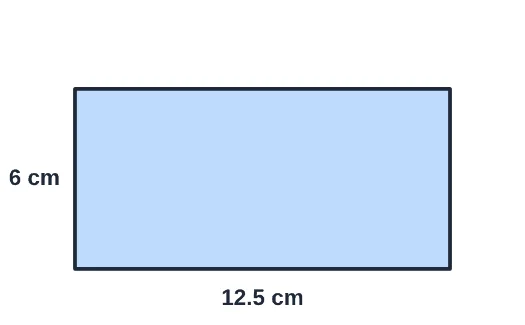
| Rectangle (length l, width w) | P = 2l + 2w | A = l × w |
| Square (side s) | P = 4s | A = s × s = s² |
Example. A rectangle is 9.7 m long and 4.5 m wide.
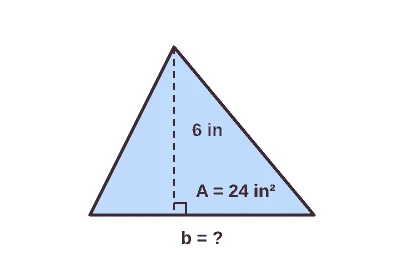
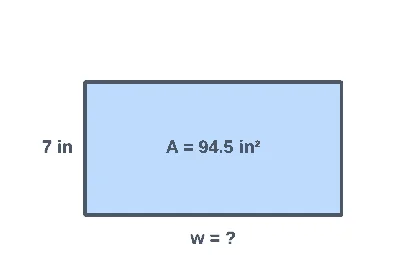
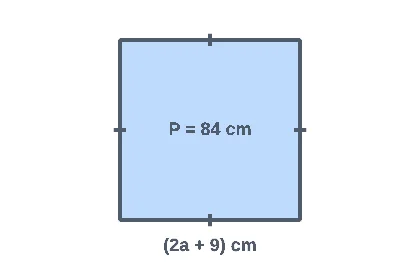
Working backwards. Write the formula, fill in what you know, then solve for what's missing.
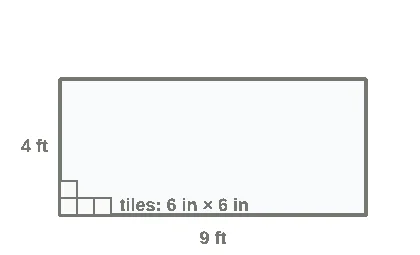
Area always uses square units: 45 ft², not 45 ft.
Each of these shapes is a rectangle in disguise.
Try it: pick a shape and press Play.
Interactive · Parallelograms, triangles and trapezoids from rectangles — try it in the lesson
| Shape | Area |
|---|---|
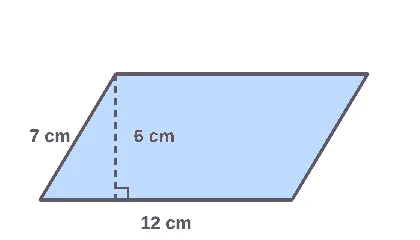
| Parallelogram | A = b × h |
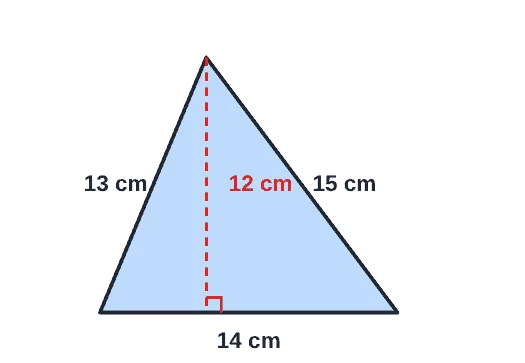
| Triangle | A = ½ × b × h |
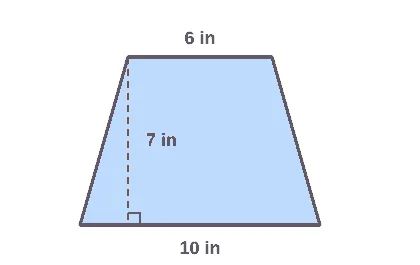
| Trapezoid (bases b₁ and b₂) | A = ½ × (b₁ + b₂) × h |
The height is always at a right angle to the base: the dashed line, not the slanted side. Slanted sides only count for the perimeter, where you add up all the sides.
Example. A parallelogram has a base of 10 cm, slanted sides of 6 cm and a height of 5 cm.
Write the formula first, then fill in the numbers. Type numbers only, without units.
Try it: roll the circle out, then switch to Slice it up.
Interactive · Roll out and slice up a circle — try it in the lesson
| Formula | |
|---|---|
| Circumference | C = π × d = 2 × π × r |
| Area | A = π × r² = π × r × r |
π ≈ 3.14: every circle's circumference is a little more than 3 of its diameters.
Example. A circle has a radius of 7 cm.
Semicircles are half a circle: find the whole circle's area or circumference, then divide by 2. For the perimeter of a semicircle, also add the straight side (the diameter).
Watch out: r² means r × r, not r × 2. If you're given the diameter, halve it before you find the area.
Use 3.14 for π and round only at the end. Type numbers only.
A composite shape is two or more shapes put together. There are two moves.
Add, when shapes are joined together:
Subtract, for a shaded region (a shape with a piece cut out):
Try it: pick an example and press Take apart.
Interactive · Take composite shapes apart — try it in the lesson
Perimeter of a composite shape: walk around the outside only. Lines inside the shape don't count, and a semicircle edge is half a circumference. For the 10 ft × 4 ft rectangle with a semicircle on one end: P = 10 + 4 + 10 + ½ × 3.14 × 4 = 24 + 6.28 = 30.28 ft.
Use 3.14 for π. Sketch the pieces on paper first. Type numbers only.
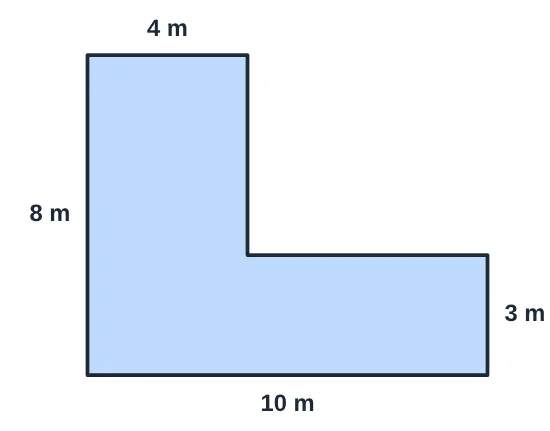
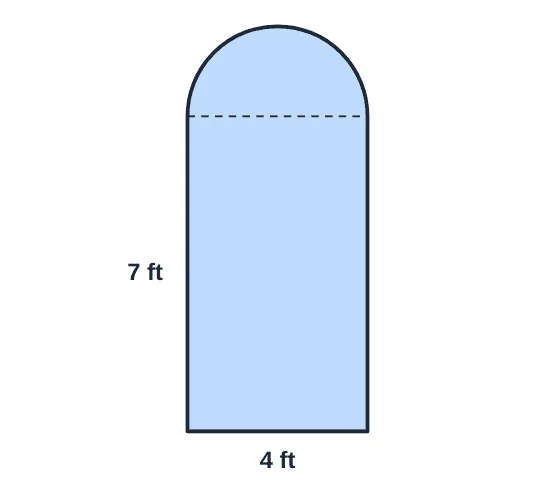
No notes this time. Use 3.14 for π.
Question 1. A square garden has an area of 2,500 ft². How many feet of fence go all the way around it?
Question 2. A baseball diamond is a square with 70 ft between bases. The team runs around the bases 3 times. How far do they run?
Question 3. A triangle has a base of 6 m, a height of 3 m and a slanted side of 5 m. What is its area?
Question 4. A trapezoid has bases of 3 cm and 7 cm and a height of 5 cm. What is its area?
Question 5. A circle has a diameter of 20 m. What is its area?
Question 6. A circle fits exactly inside a 4 cm × 4 cm square. What is the area of the square outside the circle?
| Shape | Perimeter | Area |
|---|---|---|
| Rectangle | P = 2l + 2w | A = l × w |
| Square | P = 4s | A = s² |
| Parallelogram | add all the sides | A = b × h |
| Triangle | add all the sides | A = ½ × b × h |
| Trapezoid | add all the sides | A = ½ × (b₁ + b₂) × h |
| Circle | C = π × d = 2 × π × r | A = π × r² |
| Semicircle | ½ × π × d + d | A = ½ × π × r² |
This lesson stays open after class, so you can come back to the steps and practice.
Workshopy shares this lesson under CC BY 4.0. Anyone may use and change it, with credit to you. Anyone can learn it here, free. A copy in your workspace is yours to change and run live; your students never need an account.
Version 1Current
· First published
Copies are made from the current version. A copy you already have doesn’t change.
WorkshopyOfficial10 stepsQuiz9 interactiveDiagram~65 min
gitversion controlbeginners
WorkshopyOfficial16 steps2 quizzes15 interactiveDiagram~120 min
workshopyproduct touronboarding
WorkshopyOfficial28 steps3 quizzes28 interactive~150 min
quantum physicswave-particle dualitysuperposition
WorkshopyOfficial10 steps2 quizzes10 interactive~70 min
mathexponential growthcompound interest


Comments 0
No comments yet. Be the first to say how it went.