OtherEN
Intro to Git — Snapshots, Branches & Sharing
 WorkshopyOfficial
10 stepsQuiz9 interactiveDiagram
gitversion controlbeginners
Used by 1 teacherBeginner
OKR workshop with practice: rewrite weak objectives, sort outputs from outcomes, make key results measurable and score a quarter from 0.0 to 1.0.
WorkshopyOfficial
78 lessons · used by 2 teachers
Sign in to copy it to your workspace. It’s free.
10 steps · 2 quizzes · open any step, or read it here
This OKR workshop starts with a problem many teams know: every quarter you write objectives and key results, the team works hard, and at the end the numbers that matter have hardly moved. Often the key results counted the team's work, not the change the work was for.
Interactive · A quarter of work: which key results really moved? — try it in the lesson
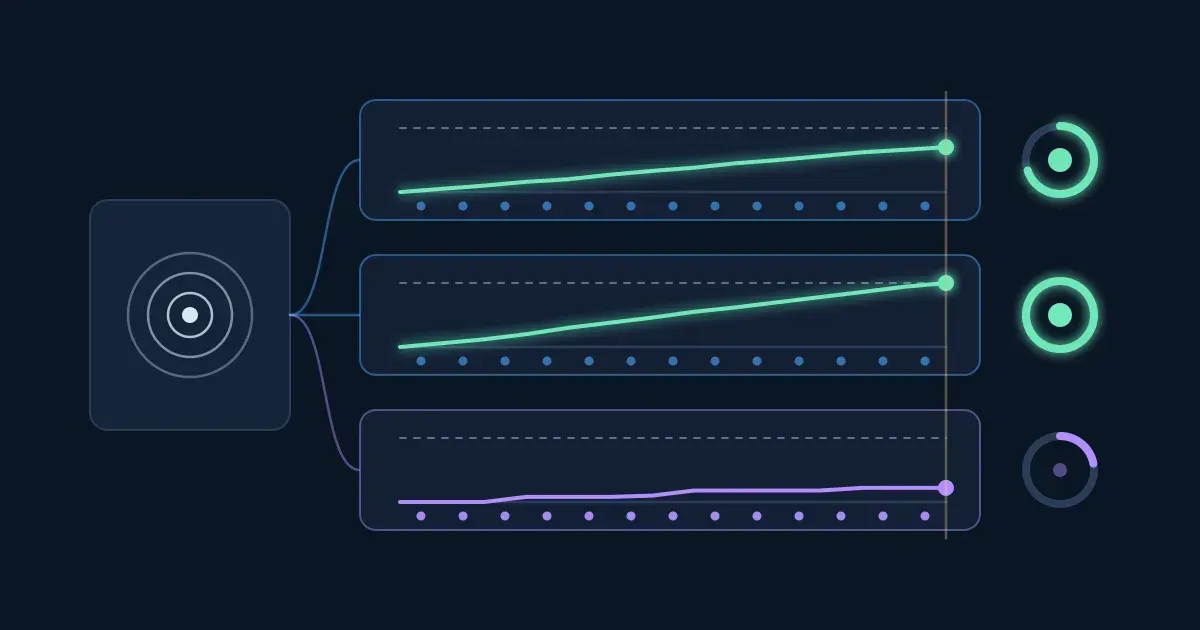
You just watched one quarter: three key results, work done in every lane every week, and only two lines climbing toward their targets. In this lesson you learn to tell those lanes apart while you write them, not thirteen weeks later.
You need a browser. No earlier OKR experience is needed.
OKR stands for objectives and key results. The objective says where the team is going, in words: short, qualitative, worth getting up for. The key results say how you will know you got there: a few numbers, each with a starting point and a target, checked at the end of a period, usually a quarter.
Andy Grove developed the method at Intel in the 1970s, building on Peter Drucker's management by objectives. John Doerr learned it there and brought it to Google in 1999; his book Measure What Matters (2018) made it widely known. The test Grove gave a key result is simple: at the end of the period you can say, without argument, whether you met it.
What is not in an OKR: the tasks. Hiring, trainings, features and campaigns are how the team plans to move the key results. They belong on the plan, and the plan can change in the middle of a quarter without changing the OKR.
How many? Few. A common rule, Doerr's included, is three to five key results for each objective, and a team rarely needs more than three objectives in a quarter.
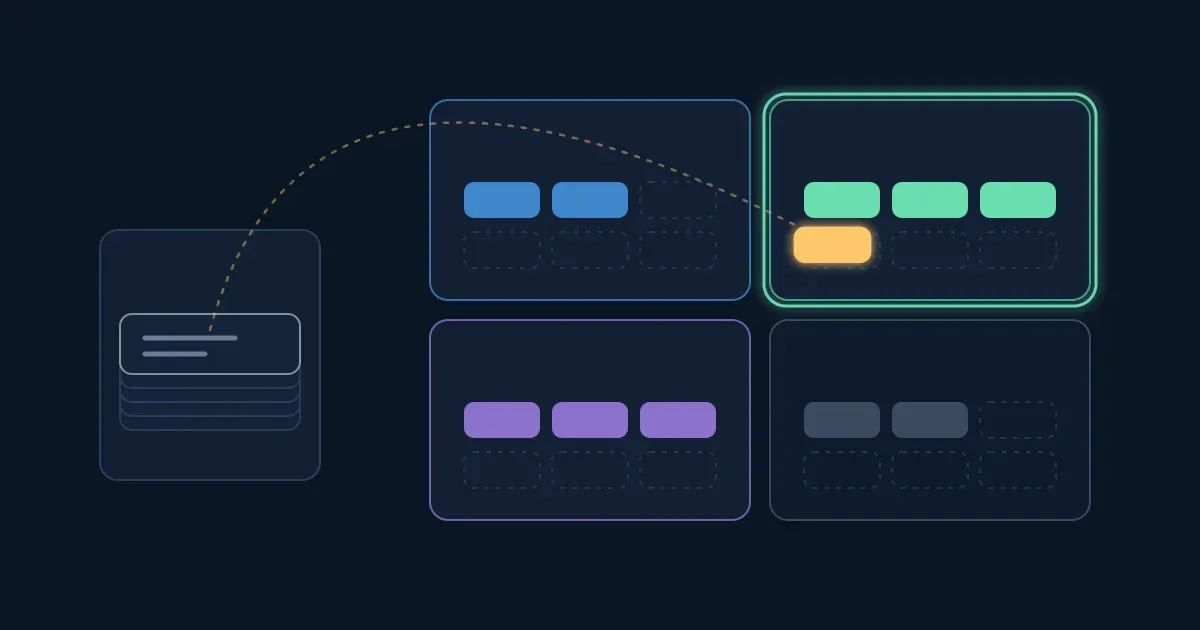
Try it: each team below has one objective, one key result and one task. Press what each card is.
Interactive · Objective, key result or task? Sort three teams' cards — try it in the lesson
Takeaway: the objective is the direction, the key results are the evidence, and the tasks are the plan.
A good objective is:
The usual weak objectives are a number dressed up as an objective ("Increase NPS"), an activity ("Make more calls"), a project ("Launch the mobile app") or a heading ("Q3 sales objectives").
Try it: each team wrote a weak objective. Pick the rewrite that is a real objective. A wrong pick tells you why it falls short.
Interactive · Rewrite three weak objectives — try it in the lesson
Takeaway: if your objective already contains a number, you have probably written a key result.
An output is something the team produces: articles published, calls made, a feature shipped. An outcome is a change you can see because of it: fewer tickets, more deals won, users coming back.
Outputs are tempting key results because the team controls them and they always move. That is the problem: a key result that counts work scores well whether or not the work did anything.
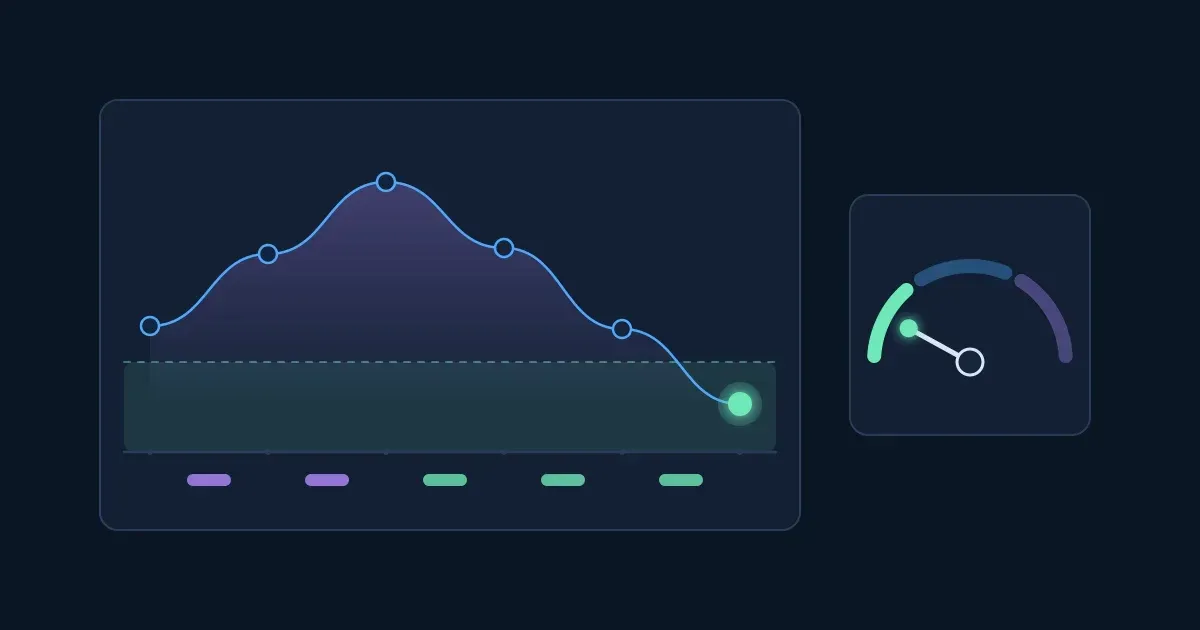
Try it: run the support team's quarter. Press Next week a few times, then Play the quarter. Then switch key result 3 from Password tickets cut to Help articles published, and look again at its score and at the dotted line. (The numbers are illustrative.)
Interactive · Run the support team's quarter, one week at a time — try it in the lesson
The articles were the same in both runs. Only the key result changed, and with it what the team would have learned at the end of the quarter.
Takeaway: measure the change the work is for, and keep the work itself on the plan.
A quick test for each draft key result: could the team do this completely and still see nothing change for customers? If yes, it is an output.
Outcomes usually measure behaviour or results ("share of new users who…", "win rate", "tickets a month") and move from a baseline to a target. Outputs usually start with a verb of work: publish, run, ship, send, make.
Try it: sort four drafts for each team. The team buttons switch between them.
Interactive · Output or outcome? Sort twelve draft key results — try it in the lesson
Takeaway: two outputs in every four drafts is normal for a first draft. The skill is spotting them before the quarter starts.
A key result needs three things before anyone can score it:
The pattern is [measure] from [baseline] to [target] by [date], for example: "Median first reply time from 9 hours to 2 hours by 30 June."
Try it: each tab holds a weak key result and a line of real data. Pick a measure, enter the baseline and a target, and tick every check.
Interactive · Turn three weak key results into measurable ones — try it in the lesson
Takeaway: if you cannot write the "from" number today, your first task is to measure it, not to set the target.
Question 1. Which of these is an objective?
Question 2. A product team writes the key result "Ship dark mode". What is wrong with it?
Question 3. Which key result can be scored at the end of the quarter?
Question 4. How many key results does a common rule suggest for each objective?
At the end of the quarter each key result gets a score from 0.0 to 1.0. A simple way to compute it:
$$\text{score} = \frac{\text{actual} - \text{baseline}}{\text{target} - \text{baseline}}$$
Round it to one decimal; it never goes above 1.0 or below 0.0. The same formula works when lower is better: reply time from 9 hours to 2 hours, ending at 4 hours, gives (4 − 9) ÷ (2 − 9) = 5 ÷ 7, a score of 0.7.
What a score means depends on the kind of OKR. Google's OKR playbook separates two kinds:
Many organisations pick their own scale; what matters is that everyone knows in advance which key results are promises and which are stretches.
Try it: move "Where it ended" and watch the score. Then switch between Aspirational and Committed: the same 0.7 means different things.
Interactive · Score a key result at the end of the quarter — try it in the lesson
Takeaway: 0.7 on a stretch goal is a good quarter; 0.7 on a committed one is a missed promise.
Score each key result to one decimal: (actual − baseline) ÷ (target − baseline), never above 1.0 and never below 0.0. A hint costs nothing.
Alignment. A company sets a few OKRs; each team then writes its own OKRs that move one of the company's key results. Avoid pure cascading, where every level copies the level above: the team usually knows best how it can move the company's number, and its key result can be its own measure.
Check-ins. Once a week or every two weeks, each key result's owner updates the number and says how confident they are of reaching the target. A key result in trouble then shows up in week four, not week thirteen, and the team can change its plan. Changing the key result itself should be rare, and visible to everyone.
Try it: the company's objective has three key results. Link each team's key result to the one it moves.
Interactive · Link each team's key result to the company key result it moves — try it in the lesson
Takeaway: a team key result should move a company key result in a way you can explain in one sentence.
A drafting session works best with a facilitator who keeps time and the checklist. Some companies call this role the OKR champion or OKR captain; the team lead joins as a participant.
Before: score last quarter's OKRs and collect today's numbers for anything you might measure, so that baselines are facts, not guesses.
During: restate the company objectives; everyone writes possible objectives alone before discussing them, so the quietest person's idea gets heard; vote down to three objectives at most; draft three to five key results for each; then test every key result against the checklist:
After: publish the OKRs where the company can see them and set the date of the first check-in.
Try it: the session's parts are in the wrong order. Move them with the arrows, then check.
Interactive · Put the OKR workshop's agenda in order — try it in the lesson
Takeaway: data before ideas, objectives before key results, and the checklist before anyone commits.
Question 1. A key result: trial sign-ups from 900 to 1,400 a month. The quarter ended at 1,250. What is the score?
Question 2. An aspirational key result scored 0.7. What does that usually mean?
Question 3. Which of these are outcomes? (pick all that apply)
Question 4. What score does a team expect on a committed key result?
Question 5. What is a weekly check-in for?
Question 6. In an OKR workshop, what comes before anyone writes an objective?
Workshopy shares this lesson under CC BY 4.0. Anyone may use and change it, with credit to you. Anyone can learn it here, free. A copy in your workspace is yours to change and run live; your students never need an account.
Version 1Current
· First published
Copies are made from the current version. A copy you already have doesn’t change.
WorkshopyOfficial10 stepsQuiz9 interactiveDiagram
gitversion controlbeginners
WorkshopyOfficial16 steps2 quizzes15 interactiveDiagram
workshopyproduct touronboarding
WorkshopyOfficial10 steps2 quizzes10 interactive
data-literacystatisticsmean and median
WorkshopyOfficial10 steps2 quizzes9 interactive
managementproject managementcritical path
WorkshopyOfficial10 steps2 quizzes9 interactive
managementtime managementeisenhower matrix
WorkshopyOfficial9 steps2 quizzes9 interactive
managementcustomer servicede-escalation

Comments
No comments yet. Be the first to say how it went.