OtherEN
Intro to Git — Snapshots, Branches & Sharing
 WorkshopyOfficial
10 stepsQuiz9 interactiveDiagram
gitversion controlbeginners
Used by 1 teacherBeginner
Formative assessment training for teachers: write hinge questions, read a class's answers, sort exit tickets and set a decision rule, trying each as a student.
WorkshopyOfficial
78 lessons · used by 2 teachers
Sign in to copy it to your workspace. It’s free.
10 steps · 2 quizzes · open any step, or read it here
Every teacher knows the moment: you ask "Everyone OK?", a few heads nod, and you move on, until the test shows half the class never followed. This formative assessment workshop for teachers is about replacing that moment with evidence from every student, read in seconds and used at once.
Interactive · Did the class get it? Read the answers, not the room — try it in the lesson
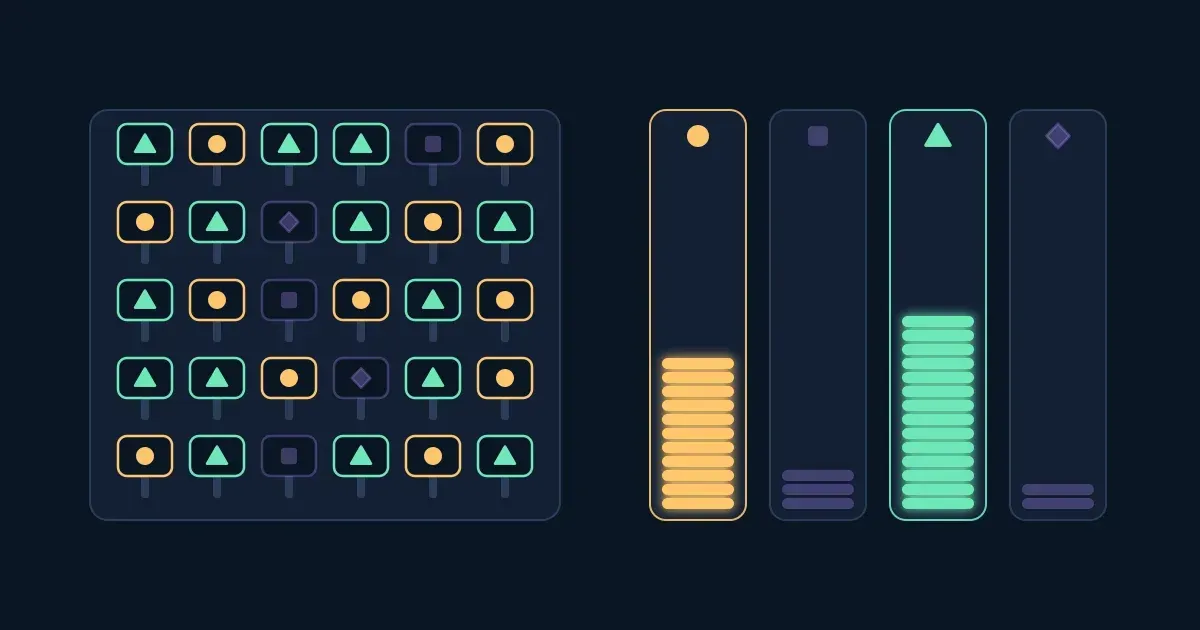
Thirty students hold up an answer at the same moment, and the answers fall into piles, one per option. A big pile on one wrong answer is not noise: it is a group of students who share the same misconception, and it tells you exactly what to reteach. By the end of this lesson you'll write questions that sort a class like that, and know what to do with each pile.
All you need is a browser. Every technique runs inside the lesson.
This formative assessment training for teachers starts with a definition that is about what you DO, not what kind of test you give. An assessment is formative when the evidence it gives is used to adapt the teaching (or the learning) while there is still time to act. The same quiz is summative when it only produces a grade, and formative when its answers decide what happens next.
The idea was put on teachers' desks by Paul Black and Dylan Wiliam's 1998 article "Inside the Black Box: Raising Standards Through Classroom Assessment" (Phi Delta Kappan), which summarised their review of the research and argued that improving formative assessment raises standards. It is often called assessment for learning.
Evidence needs something to be read against. Before you check, be clear about:
Try it: the lesson below lasts 60 minutes, and a misunderstanding starts at minute 12. Move the slider to choose how often you check, or press one of the plans.
Interactive · When do you find out? Check late or check often — try it in the lesson
A check at the end only tells you what went wrong. Checks during the lesson leave time to fix it.
Takeaway: formative is a use, not a test type: evidence, read in time, that changes what you do next.
A hinge question is a short multiple-choice question asked at the point of a lesson where the next part depends on the class having understood this one: the hinge the lesson turns on. Dylan Wiliam describes it in Embedded Formative Assessment (2011). The rules of thumb usually given:
Try it as a student first: answer the question below yourself. Then press Collect answers and read the piles as the teacher. Make a decision for each of the three classes.
Interactive · One hinge question, thirty answers, four piles — try it in the lesson
The three classes answered the same question, and each needed a different next ten minutes. A pile on one wrong answer is a group with one shared idea: reteach that idea to that group. Answers spread over every wrong option mean the explanation didn't land for anyone: teach it again, differently.
Takeaway: a hinge question turns "did they get it?" into a decision you make in half a minute, while the lesson can still change.
The wrong options in a hinge question are called distractors, and they do most of the work. A good distractor is a wrong answer that a student with one particular misunderstanding would choose. A filler option ("it's random", or an answer nobody would pick) only tells you that someone is wrong.
Where to find good distractors:
Try it as a student first: work out the jacket's price yourself. Then pick three wrong answers and see what each would tell you.
Interactive · Build a hinge question: pick the wrong answers that tell you something — try it in the lesson
When every wrong option points to a different idea, any answer a student gives tells you what to do: the right answer means move on, and each wrong one names what to reteach.
Takeaway: write each distractor from a real misconception, so that every pile in the class's answers has a meaning.
A hinge question only works if you see every answer. "Hands up" shows you the students who are confident, quick or keen, and calling on one name shows you one student. What you need is all-student response: everyone answers at the same moment, and you read the room in one look.
Try it as a student first: the next time a question appears in this lesson, answer before you look at anyone else. Then try the three ways of asking below.
Interactive · Hands up, one name, or everyone at once: what you get to see — try it in the lesson
Holding up answers together also takes away the cost of being wrong in public: everyone shows at once, so no one is the only one.
Takeaway: if you only hear from volunteers, you are assessing the volunteers.
Question 1. What makes an assessment formative?
Question 2. Which describes a good hinge question?
Question 3. Why should each wrong option come from a known misconception?
Question 4. You ask "Hands up who knows?" Six hands go up and five of them answer correctly. What do you now know about the class?
After a question, most teachers wait about a second before taking an answer or answering it themselves. Mary Budd Rowe's studies of science lessons in the 1970s found waits of under a second were common, and that when teachers waited three seconds or more, more students answered, their answers were longer, and fewer said "I don't know".
A wait that short means the quickest students answer every question, and the rest learn that they don't have to.
Try it as a student first: when your trainer asks the next question, don't answer for three silent seconds, even if you know. Then set a wait below and press Ask the question.
Interactive · Wait time: how many have an answer ready when you take one? — try it in the lesson
Two habits make the wait work: say "Everyone think, no hands yet", and use all-student response at the end of the wait, so the thinking time ends with everyone answering, not one volunteer.
Takeaway: wait at least three seconds after a question, and again after an answer, before you speak.
An exit ticket is one or two questions students answer on a slip (or a screen) in the last minutes of a lesson, before they leave. The point is not to mark them. Sort them into a few piles by what they show, and let the piles decide how the next lesson starts.
A good exit ticket question:
Try it as a student first: answer the ticket below in one sentence of your own. Then sort the class's nine tickets, and plan tomorrow.
Interactive · Sort the exit tickets into piles and plan tomorrow — try it in the lesson
Three piles are usually enough: got it, one shared wrong idea, and something else. Sorting thirty tickets that way takes a few minutes, and the plan follows from the piles.
Takeaway: an exit ticket is a plan for tomorrow's first ten minutes, not a mark for today.
Each exercise shows a hinge question a teacher asked, and the wrong answer one student chose. Pick the misconception that answer most likely shows. A wrong pick costs nothing.
Formative assessment gives the teacher evidence; feedback gives the student their next step. Not every comment does that. In Avraham Kluger and Angelo DeNisi's 1996 review of feedback studies, feedback improved performance on average, but in more than a third of the cases it made performance worse, and feedback that turned attention towards the person rather than the task tended to help least.
Feedback that moves learning:
Try it as a student first: read the conclusion below and write the one comment you would give. Then open what each of the four comments leads to.
Interactive · Four comments on the same work: which one moves it forward? — try it in the lesson
Takeaway: a useful comment names the task and the next step, and the student gets time to act on it.
Evidence only helps if it changes what happens next, and decisions made on the spot drift toward "move on". Decide your rule before you ask the hinge question, and write it on the plan. A common shape:
The numbers in the rule are yours to set: there is no research-given threshold. Start with the suggested ones and adjust them to your subject and your class.
Try it: move the three sliders and watch what your rule decides for four classes that answered the same hinge question. Then copy the rule for your next lesson plan.
Interactive · Set your decision rule, then test it on four classes — try it in the lesson
Takeaway: a rule written before the question turns thirty answers into one decision, made in seconds and the same way every time.
Question 1. Which of these is formative assessment?
Question 2. 30 students answer a hinge question. 13 choose the right answer, and 12 choose the same wrong option, which comes from one known misconception. What is the best next step?
Question 3. Why wait three seconds or more after asking a question?
Question 4. What is the main job of an exit ticket?
Question 5. Which comment is most likely to improve the student's next piece of work?
Question 6. Which of these show you every student's answer at the same moment? (pick all that apply)
Workshopy shares this lesson under CC BY 4.0. Anyone may use and change it, with credit to you. Anyone can learn it here, free. A copy in your workspace is yours to change and run live; your students never need an account.
Version 1Current
· First published
Copies are made from the current version. A copy you already have doesn’t change.
WorkshopyOfficial10 stepsQuiz9 interactiveDiagram
gitversion controlbeginners
WorkshopyOfficial16 steps2 quizzes15 interactiveDiagram
workshopyproduct touronboarding
WorkshopyOfficial10 steps2 quizzes10 interactive
data-literacystatisticsmean and median
WorkshopyOfficial11 steps2 quizzes10 interactive
trainersactive learningpeer instruction
WorkshopyOfficial10 steps2 quizzes8 interactive
trainersfacilitationworkshops
WorkshopyOfficial11 steps2 quizzes10 interactive
trainerstrain the trainerworkshop design
Comments
No comments yet. Be the first to say how it went.